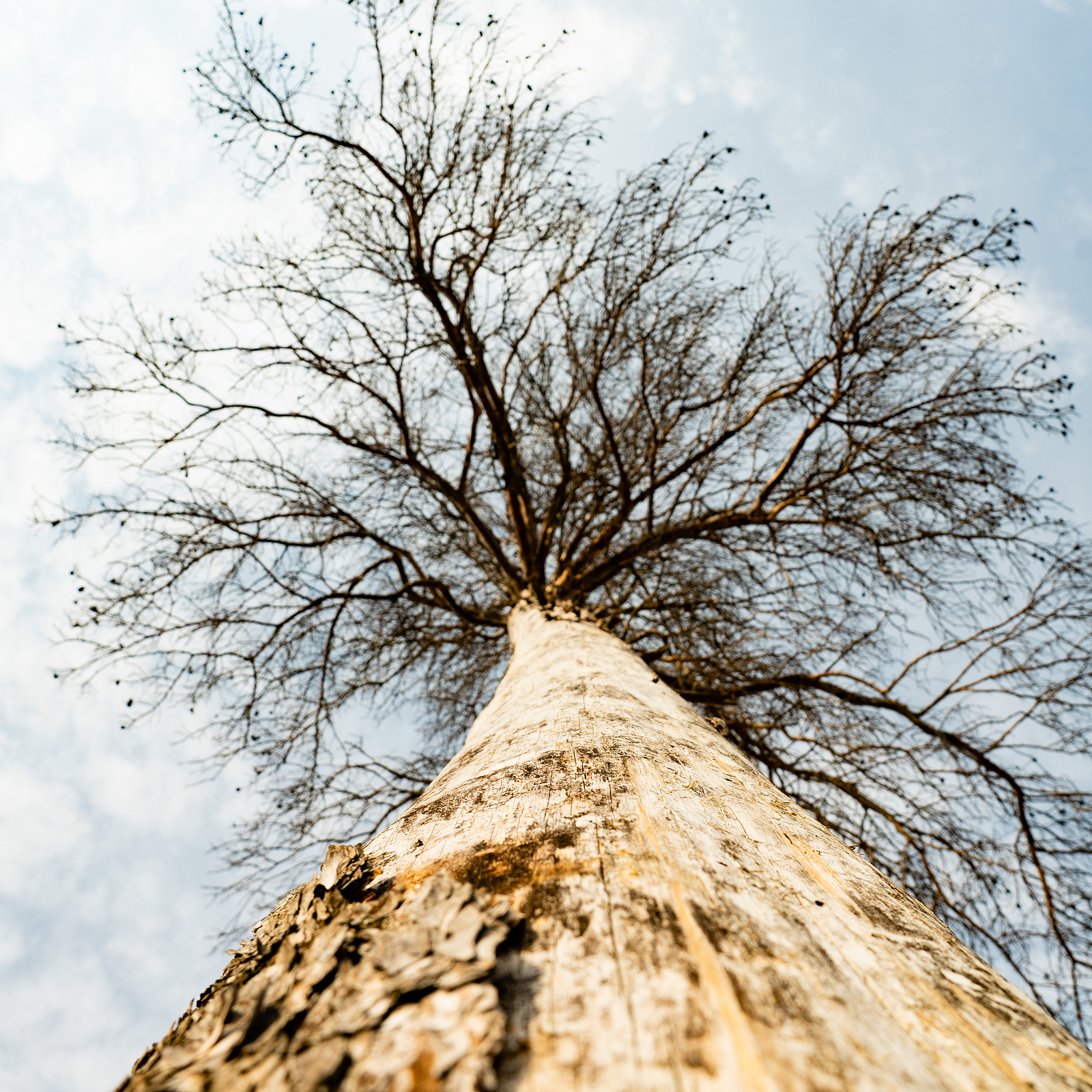
A homeowner walking the yard after a long weekend might not notice anything wrong at first. The red maple by the driveway still throws plenty of shade, and the grass underneath looks fine. It’s only when you look up that the story changes. Past the full lower branches, a few bare, brittle limbs near the top tell a different tale. At We Care Tree Service, we look for the signs of a dying tree early. That way, we can catch trouble before a branch falls or a trunk starts leaning toward the house. Trunks, limbs, and root zones all leave clues. Catching them early gives you more time to decide what happens next.
Canopy Changes Reveal Trouble Above
Bare pockets in an otherwise leafy crown often show up first. So do dry twigs, or leaves that turn pale weeks before nearby trees change color. During tree trimming, we remove damaged limbs and check how much sound wood remains. A thin canopy often points to stress farther below.
- Dead branch clusters: Several dead limbs in one area often trace back to a damaged section of trunk.
- Off-season leaf loss: Leaves dropping in July or August deserve a closer look.
- Weak limb unions: Bark trapped between two major stems can signal a spot where the tree may split.
Signs a Tree Is Dying Inside
A dark cavity at the base can mean trouble. So can soft wood around an old wound, or mushrooms after a wet week. Each one can mean decay is moving inside. We read the trunk rather than relying on bark color alone. Our crew taps suspect areas and checks for fungal growth near the roots. Then we explain whether pruning still makes sense, or whether tree removal is the safer choice.
- Hollow areas: Openings in the trunk can expose wood that has already begun to break down.
- Deep trunk cracks: The direction of the crack and the strength of the wood around it both matter.
- New mushrooms: Fungi near the base call for a careful inspection, especially after long periods of rain.
Root Failure Changes the Tree’s Position
After heavy rain and hard wind, fresh leaning is a serious warning sign. So is a ridge of lifted soil near the base. This can happen even when the tree still looks green overhead. For storm hazards, we answer the phone around the clock. We move especially fast when a tree threatens a driveway, roofline, or utility area.
Crowded limbs and poor spacing can often be corrected early with tree trimming. If the structure is already failing, we bring the right equipment instead. We work carefully around nearby features and clean up when the job is done.
In Fishers, IN, hidden tree damage can quickly turn into an emergency. We Care Tree Service takes a hands-on look and explains the next step in plain language. Contact us at (317) 224-8765 or request a free quote to get started.